


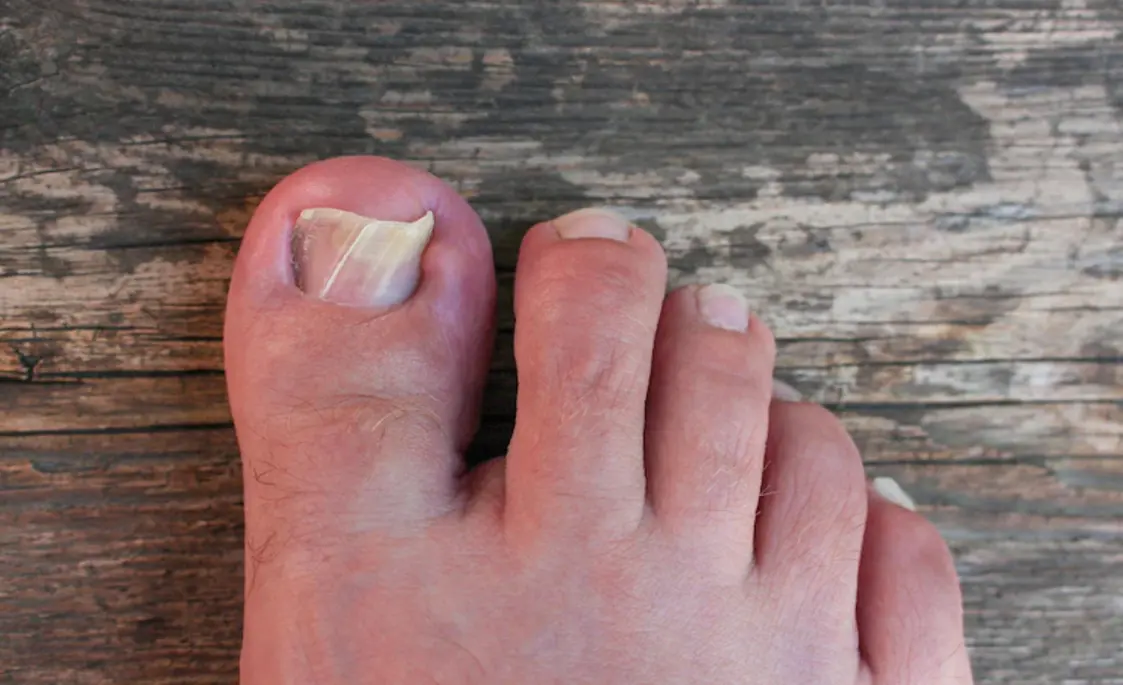
The ingrown toenail situation can occur in many people. If such a situation occurs, it is important to treat it as quickly as possible. Because the wrecks in question can cause serious pain and infection. These nails, which can also occur in the hands, are ingrown, especially in the toenails. Although stinging in the hands can go away on its own, the foot usually requires intervention.
In ingrown nails that do not resolve spontaneously, removing a part or all of the nail
may be considered. This varies from patient to patient. First, the foot is cleaned with an antiseptic solution, and then anesthetized with an anesthetic substance. There are many treatment methods such as pulling the nail, removing a
part of the nail and correcting and sewing the part of the nail. treatment is applied. We perform partial nail resection and germinal matrix cauterization.
Non-surgical nail ingrown treatment
We perform partial nail resection and germinal matrix cauterization. There is no seam in the process and does not require post-processing dressings. Then the nail bed is revised and the germinal
matrix located at the nail root is cauterized. Antibiotic creams are applied and you are provided with
to return to your normal life on the same day. The probability of recurrence is low and it is a comfortable procedure.
What is nail ingrown?
Ingrown toenail is a health problem that occurs in the form of nails reaching the nail bed and causing pain. Ingrown nails, especially on the big toes of the feet, cause serious pain for people. In general, it curves
at the corners or edges of the toenails and damages the skin around it. This situation causes people to suffer serious pain. It can even bring with it the effects such as difficulty in walking.
TV programs I joined
What causes ingrown nails?
Ingrown nails can be seen for different reasons. Cutting the nails too short is one of the reasons for this.
Not wearing the right shoes for themselves can also result in stinging. In addition, the nail size
and the width of the nail bed are unbalanced can also cause these problems. Excessive sweating of the feet can also result in ingrown nails.
The causes of ingrown nails can be listed in different ways. There may be different factors for this situation to occur. These factors are listed as follows in general;
1. Hitting a ball at frequent intervals
2. Dropping something on the foot
3. Hitting the foot in a corner
4. Choosing the wrong shoe
5. Care for the cutting of the nail not showing
6. False nail cutting
7. Excessive sweating of the feet
8. Keeping the feet clean and dry…
What are the ingrown toenail diagnosis methods?
If ingrown nails have occurred, this situation should be understood first. In order to make this
diagnosis, it is sufficient to pay attention to certain situations. If there is pain and tenderness on the edge of a nail
and there is redness around it, it is described as ingrown nails. This can also cause tissue infections.
What are the symptoms of ingrown toenails?
Various symptoms occur in case of ingrown toenails. The symptoms in question are generally listed as follows;
- Pain and tenderness at the edge of the toenails
- Flushing and swelling of the nail edges
- Serious pain in the toenails
- Swelling on one or both sides of the nails
How does nail ingrown go?
After the ingrown nail problem occurs, it is among the topics that are wondered how this will happen. The most appropriate treatment methods for the health problem in question are applied according to the examination
findings. Unconscious interventions can make the situation worse.
What are the treatment methods for ingrown toenails?
When it is said how to get rid of ingrown nails, it is definitely important to apply the most appropriate treatments. This problem is completely gone by itself. However, people who want to get rid of the feeling of pain as soon as possible can act earlier. For this, the doctor should be checked and then the necessary drugs should be used. In some cases, an infection may occur in the tissues of the patients. At this point, antibiotics can also be used on the advice of a doctor. In ingrown nails that cannot be treated with the necessary pomade and precautions, intervention
may be required. The method applied by us is the partial resection and germinal matrix cauterization, which is a 10-minute
application that does not require a seamless and dressing.
What should be done to prevent ingrown nails?
Neding It is a problem that can be seen in all breeds and age groups, where the corner or edge of the nail sinks into the soft part of the meat. Common symptoms are as follows;
1. Increasing discharge and heat in the tissue around the nail
2. Swelling around the nail
3. Redness around the nail
4. Sensitivity in the nail bed
Ingrown nails can be seen not only in adults but also in infants. Since this can be very painful, more attention should be paid to
. In addition to the above symptoms, when pressure is applied there, the baby’s crying, starting to dislike his shoes, limping or crying while walking
may also show this.
Which doctor to go to for ingrown nails?
For ingrown nail treatment, patients should apply to doctors interested in ingrown nails. When patients go to the doctor, they can more easily understand what to do and how to treat
.
How about ingrown nails?
Ingrown nails usually occurs in the thumb. However, it can be seen on other fingers without being limited to this. As an image, it creates an appearance in which the corners or edges of the nail sink into soft flesh.
Although it is usually a condition that resolves spontaneously, it may be necessary to go to the hospital in some cases.
Especially in cases such as:
1. Diabetes due to poor blood flow to the feet
After the examination about Nail ingrown treatment, physicians will create a correct treatment plan in a special way for individuals.
What happens if ingrown nails are not treated?
If ingrown nails are not treated, undesirable situations may occur. If the situation is delayed and precautions are not taken after this
problem occurs, infection may occur in the damaged tissues of people. Although it looks like a simple ingrown nail, infection that occurs can cause serious problems.
What causes ingrown nails?
In case of ingrown toenails, inflammation may occur over time. The reason for this
situation draws attention as it is actually extremely simple. Foot tissue has a very sensitive structure after the nail
ingrown. In this case, it becomes extremely easy to get an infection.
Does ingrown toenails cause gangrene?
One of the most feared details in case of a nucking is whether this situation will cause gangrene. This situation occurs extremely rarely. In this case, surgical interventions are required.
Who Happens To Nail Ingrown?
Ingrown nails are a condition that can occur frequently in both men and women. It is more common in people with thick nails.
How long does it take to have ingrown toenail surgery?
For the treatment of ingrown toenails, intervention may be required in certain situations. In this case, the intervention to be made is generally very short. This
process is performed within a period of not exceeding 10 minutes.
How long does it take to heal ingrown nails?
Ingrown nail treatment usually passes by itself. This period can take up to 1 week.
Does ingrown nail go away on its own?
The How to get a nail stick question is almost
of the issues that people with this problem think about. Because it creates serious pain. Usually, this ailment can go away on its own, paying attention to the nail cutting, when wearing comfortable shoes that take air
.
Putting cotton under the toenail, soaking the feet in warm water 3-4 times a day for an average of 20 minutes, placing clean cotton on the edge of
can also help them grow correctly. Apart from this, antibiotic
treatment can also be used. However, these should be with the advice of the doctor.
However, in some cases, ingrown nails may not resolve on their own and the question of how to get rid of ingrown nails comes to mind.

He was born on 20.05.1980 in Ankara. He completed his primary, secondary and high school education in Ankara. During his high school education, he represented his school in Mathematics and Chemistry at the TÜBİTAK Science Olympics. Later, he completed his education at Uludağ and Kırıkkale universities and became a General Surgery Specialist. During the training process, he also received training on subjects such as upper and lower GI endoscopy (esophagastroduodenoscopy and colonoscopy), laparoscopy (closed surgery techniques), intensive care, burn and experimental animals. There are members of the Turkish Surgery Association, Internal and Surgery Intensive Care Association, and some of the institutions where Kırıkkale University, Başkent University, Muş State Hospital (Compulsory Service), Private Duygu Hospital and Biruni University Medical Faculty Hospital work.
- Bimodal Gastric Botox
- Gastric Balloon
- Incisional Hernia
- Haemorrhoids (Piles) Treatment
- Pilonidal Sinus Treatment
- Thyroid Gland Diseases / Goiter
- Breast Cancer
- Gallbladder Surgery / Diseases
- Gastroscopy & Colonoscopy
- Ingrown Toenail
- Endoscopy
- Anal Fissure
- Umbilical Hernia
- Inguinal Hernia
- Gastric Sleeve Surgery (Sleeve Gastrectomy)
- Elipse Swallowable Gastric Balloon